8 Reasons to Love Marriott International – World’s Leading Luxury Hotel Brand
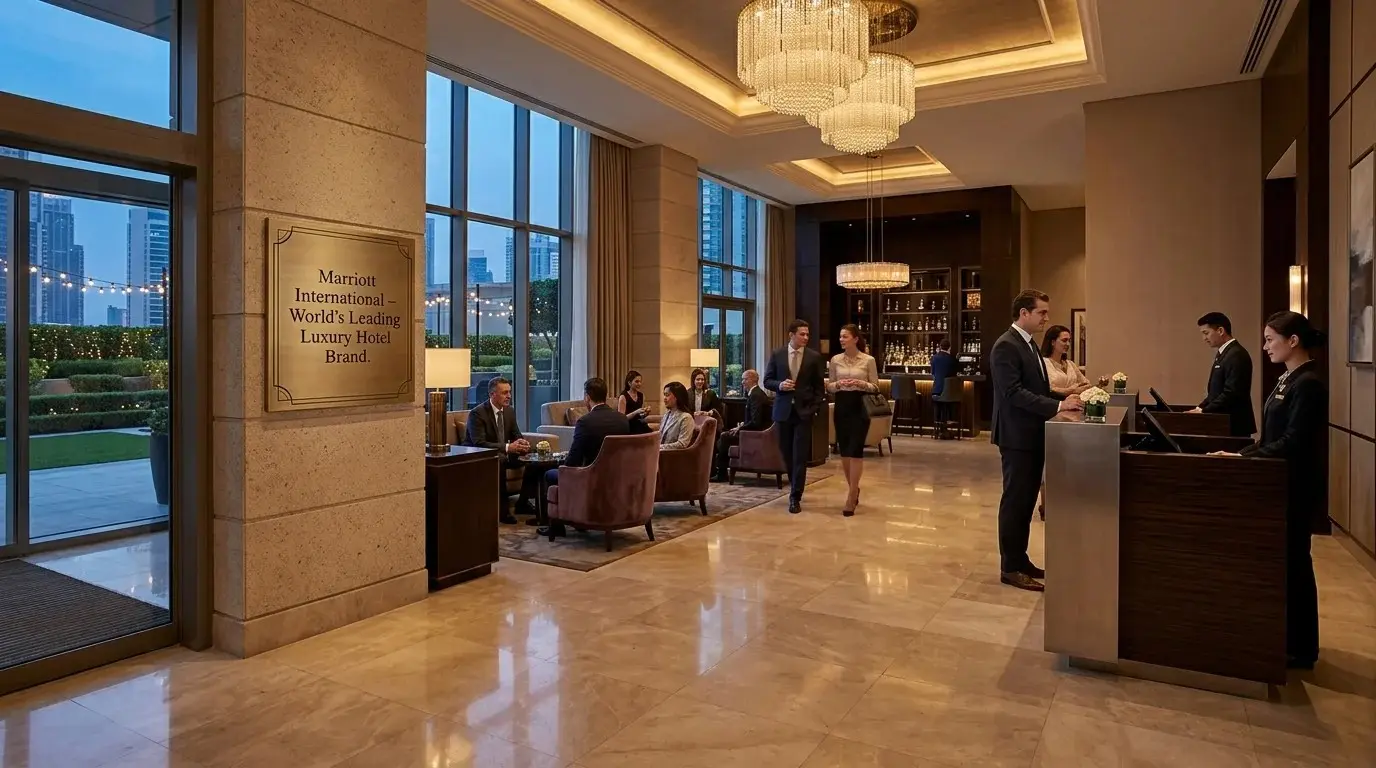
Table of Contents
Marriott International stands as an undeniable titan in the global hospitality industry, widely recognized as the world’s leading luxury hotel brand. From its humble beginnings as a root beer stand in Washington, D.C., in 1927, the company has transformed into a sprawling empire encompassing more than 30 leading brands across 144 countries and territories, with over 9,300 properties worldwide. While its portfolio spans various segments, Marriott’s commitment to unparalleled luxury and exceptional service has solidified its position at the pinnacle of high-end travel. This article delves into the strategies, brands, and innovations that cement Marriott International’s status as the quintessential leader in luxury hospitality.
Introduction: A Legacy of Unparalleled Hospitality
Marriott International’s journey to becoming a global hospitality powerhouse is a testament to its enduring vision and adaptability. Founded by J. Willard Marriott and his wife Alice S. Marriott, the company’s ethos of putting people first and delivering exceptional service has remained a cornerstone throughout its nearly century-long history. Today, Marriott’s luxury division is not merely a collection of high-end hotels; it is a meticulously curated ensemble of distinct brands, each offering a unique interpretation of luxury, designed to cater to the diverse preferences of affluent travelers. This strategic approach allows Marriott to dominate a significant share of the luxury market, appealing to guests seeking everything from classic elegance to cutting-edge design and immersive cultural experiences.
The Historical Evolution of a Global Leader
The origins of Marriott International trace back to May 27, 1927, when J. Willard Marriott and his wife, Alice Sheets Marriott, opened a nine-seat A&W Root Beer stand in Washington, D.C. This initial venture, known as Hot Shoppes, quickly expanded, evolving into a restaurant chain before making its pivotal entry into the lodging industry. The first Marriott hotel, the Twin Bridges Motor Hotel, opened in Arlington, Virginia, on January 16, 1957. This marked the beginning of Marriott’s ascent in the hotel business.
A significant strategic move came in 1993 when Marriott Corporation split into two companies: Marriott International, Inc., which manages and franchises properties, and Host Marriott Corporation (now Host Hotels & Resorts), which owns properties. This asset-light model has been a key factor in its rapid expansion. A crucial step into the luxury segment was the acquisition of a 49% interest in The Ritz-Carlton Hotel Company in 1995, with Marriott gaining majority ownership by 1998. This strategic acquisition instantly elevated Marriott’s luxury credentials. Further expanding its global footprint and brand portfolio, Marriott acquired the Renaissance Hotels and Ramada brands in 1997. The transformational acquisition of Starwood Hotels & Resorts in 2016 further solidified Marriott’s position as the world’s largest hotel company, adding 11 new brands and significantly enhancing its luxury offerings. These historical milestones underscore Marriott’s consistent ambition to grow and diversify, particularly within the lucrative luxury market segment.
The Expansive Luxury Portfolio: A Brand for Every Discerning Traveler
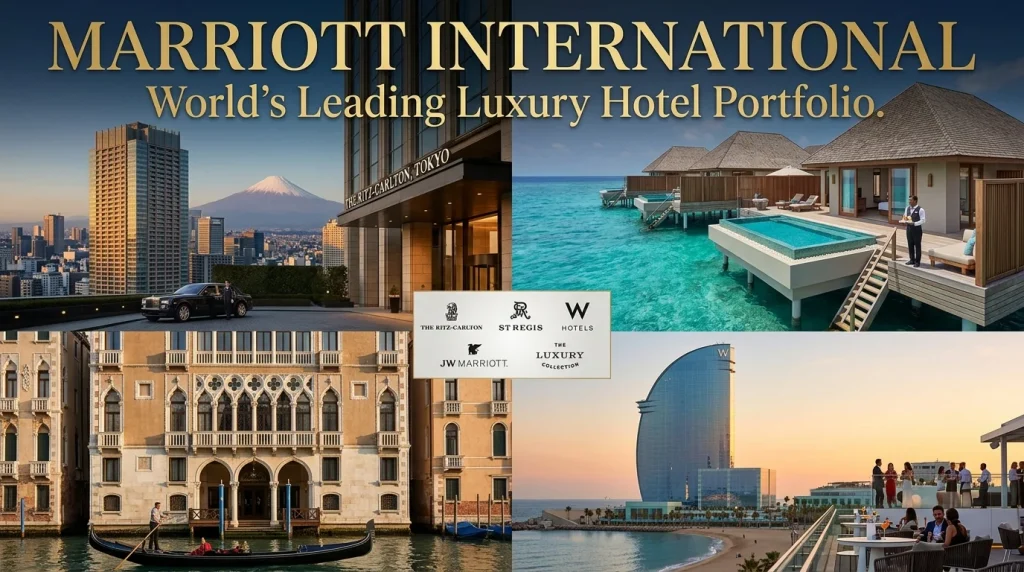
Marriott International boasts an unrivaled portfolio of eight distinct luxury brands, each meticulously crafted to offer authentic, rare, and enriching experiences. This diverse collection caters to a wide spectrum of affluent travelers, ensuring a perfect fit for every preference. As of January 2025, Marriott’s luxury portfolio comprises 658 hotels, resorts, and branded residential properties across 74 countries and territories.
Key luxury brands under the Marriott umbrella include:
- The Ritz-Carlton: Renowned for its legendary service and classic elegance, The Ritz-Carlton offers impeccable service and luxurious experiences, specializing in high-end rest and relaxation, as well as weddings and honeymoons.
- St. Regis Hotels & Resorts: Epitomizing modern indulgence and refined taste, St. Regis delivers exquisite immersive experiences and impeccable service. The brand is known for its distinctive butler service and timeless glamour.
- W Hotels: Balancing luxury and lifestyles, W Hotels merge innovative design with vibrant food, beverage, and entertainment experiences. W Hotels target the next generation of luxury travelers with its bold design and energetic atmosphere.
- EDITION: A collection of individualized hotels that offer a curated taste of the locale alongside exceptional style and service, EDITION is focused on innovative design and vibrant social scenes.
- The Luxury Collection: This curated ensemble of the world’s most iconic hotels truly defines their destinations, offering high-end experiences in 124 iconic locations.
- JW Marriott: Focused on guest well-being, JW Marriott properties offer wellness and relaxation in sophisticated environments across 110 properties in 29 countries.
- Bulgari Hotels & Resorts: A partnership with the Bulgari jewelry brand, this ultra-luxury brand conveys the excitement and timeless glamour of the Italian designer, appealing to guests in the top 0.01%.
- Ritz-Carlton Reserve: Offering an even more exclusive and immersive experience, these resorts provide unique escapes in remote and exotic locations.
Marriott’s strategic focus on its luxury segment is evident in its continuous expansion. In 2024, the company signed a record 61 deals for luxury hotels and resorts, adding 266 properties to its pipeline. Furthermore, over 260 luxury hotels and resorts were in the global development pipeline at the end of 2024, with more than 30 properties expected to open in 2025 alone. Marriott currently holds a leading 16.9% global market share of luxury hotels, surpassing competitors like Hyatt (11.4%), Accor (10%), and IHG (8.8%).
| Marriott Luxury Brand | Defining Characteristic | Number of Properties (Approx.) | Target Traveler Profile |
|---|---|---|---|
| The Ritz-Carlton | Legendary service, classic elegance | 119+ | Affluent, seeking traditional luxury and impeccable service |
| St. Regis Hotels & Resorts | Exquisite immersive experiences, refined taste, butler service | 50+ | Discerning, seeking modern indulgence and bespoke service |
| W Hotels | Innovative design, vibrant lifestyle, entertainment | 60+ | Trendsetters, seeking energetic and stylish experiences |
| EDITION | Curated locale taste, exceptional style, personalized service | 14+ | Sophisticated, seeking individualized and culturally immersive stays |
| The Luxury Collection | Iconic hotels defining their destinations, high-end experiences | 120+ | Explorers, seeking unique and culturally rich properties |
| JW Marriott | Wellness, relaxation, sophisticated environments | 110+ | Health-conscious, seeking refined comfort and tranquility |
| Bulgari Hotels & Resorts | Ultra-luxury, timeless glamour, Italian designer aesthetics | 6 | Elite, seeking exclusivity and high-fashion luxury |
| Ritz-Carlton Reserve | Exclusive, immersive, remote luxury escapes | Limited, highly exclusive | Ultra-affluent, seeking secluded, personalized adventures |
Innovation and the Future of Guest Experience
Marriott International consistently pushes the boundaries of hospitality through innovation, aiming to deepen personalized guest experiences and create more efficient hotel operations. The company leverages technology to deliver intuitive and seamless stays. In 2017, Marriott teamed with Samsung and Legrand to launch the hospitality industry’s first Internet of Things (IoT) hotel room, exploring concepts that could elevate the guest experience and contribute to sustainability efforts. This IoT Guestroom Lab allowed multiple responsive systems to communicate, enabling guests to personalize their room environment, from wake-up alarms to initiating yoga routines on a full-length mirror.
More recently, Marriott has introduced AI-powered conversational search tools. In June 2026, Marriott International launched “Ask Bonvoy,” a new AI-powered search experience available in beta on Marriott.com and its mobile apps. This tool helps Marriott Bonvoy members more intuitively explore the vast portfolio of approximately 10,000 properties, transforming travel exploration by allowing natural language queries. The company is dedicated to continuous innovation, focusing on mobile and voice-enabled technology to empower guests to set up their rooms to best meet their needs, whether for relaxation or productivity. This forward-thinking approach ensures Marriott remains at the forefront of guest satisfaction.
Marriott’s commitment to personalization extends through its use of guest history and loyalty data to tailor room selections, offers, and recommendations. Mobile check-in, mobile keys, and digital concierge features further enhance the guest journey, supporting a smoother experience before and during a stay. These technological advancements, combined with a focus on human empathy in service delivery, are critical to Marriott’s ability to provide a consistent yet personalized luxury experience at scale.
Global Reach and Strategic Growth in the Luxury Segment
Marriott International’s global footprint is extensive, with properties spanning 144 countries and territories, making it one of the largest hotel companies in the world. This vast network allows Marriott to offer diverse luxury experiences across continents, from bustling urban centers to serene resort destinations. The company’s growth strategy for its luxury segment is particularly aggressive, driven by rising global affluence and an increasing demand for premium travel experiences.
Marriott plans to add between 230,000 and 270,000 net rooms between year-end 2022 and 2025, expanding its global portfolio to nearly 1.8 million rooms, with a particular focus on the luxury and midscale spaces. Marriott International announced outstanding global growth in 2025, marked by meaningful acceleration in midscale, extraordinary luxury expansion, and record-breaking growth in branded residences. The company reinforced its luxury leadership in 2025 with a record-breaking 114 luxury deals, representing nearly 10% of its organic signings, and closed the year with 296 hotels and resorts in the luxury pipeline. This includes significant expansion in North America, particularly in high-demand leisure and business-travel destinations, reflecting a broader shift where travelers prioritize personalized experiences, wellness tourism, and destination-driven travel.
The company continues to expand its offerings with new brand extensions, tented camps, remote lodges, and bespoke experiences, further elevating its leadership in high-end hospitality. This strategic growth is bolstered by the anticipated transfer of $80 trillion USD in wealth globally over the next two decades, with emerging affluent travelers, particularly Millennials and Gen Z, reshaping luxury travel by prioritizing transformative adventures and deep social connections over material possessions.
Marriott Bonvoy: Elevating the Luxury Travel Ecosystem
Central to Marriott’s strategy for maintaining its leadership in the luxury sector is Marriott Bonvoy, its highly awarded travel program. With over 220 million global members, Marriott Bonvoy is one of the world’s largest travel loyalty ecosystems. The program offers a wealth of benefits designed to enhance the luxury travel experience, fostering loyalty and providing exclusive access to a global network of properties.
Marriott Bonvoy members can earn points on stays, eligible dining, and spa charges, as well as through co-branded credit card spending. These points can be redeemed for free hotel nights, flights, car rentals, and unique “Marriott Bonvoy Moments,” which offer transformative experiences such as private concerts, Formula 1 paddock experiences, and celebrity chef dinners. The program features elite tiers like Platinum Elite and Titanium Elite, which unlock significant perks. Platinum Elite members, for instance, receive complimentary access to Club Lounges at participating properties, offering daily breakfast, afternoon snacks, and evening cocktails, along with enhanced room upgrades and late checkout. Titanium Elite status provides even greater benefits, including a 75% bonus on points, a 48-hour guaranteed availability, and a dedicated elite support line.
Marriott Bonvoy also extends its value through strategic partnerships, such as Emirates Your World Rewards™ and United MileagePlus RewardsPlus®, allowing members to earn miles on flights and points on stays, further integrating the luxury travel experience. The program’s comprehensive nature and focus on delivering high-value perks make it a critical differentiator in attracting and retaining luxury clientele. This extensive ecosystem ensures that guests not only choose Marriott for a single stay but become lifelong patrons, deeply embedded in the brand’s expansive world of travel. For more insights into how loyalty programs are shaping the travel industry, one can refer to Wikipedia’s article on loyalty programs.
Sustainability and Social Impact: A Responsible Global Citizen
In an era of increasing environmental consciousness, Marriott International is deeply committed to integrating sustainability and social impact into its core business strategy. The company’s platform, “Serve 360: Doing Good in Every Direction,” outlines a comprehensive set of 2025 Sustainability and Social Impact Goals.
Key environmental targets include:
- Reducing carbon intensity by 30%.
- Reducing water intensity by 15%.
- Reducing waste to landfill by 45% (with a 50% cut in food waste).
- Achieving 30% renewable electricity across its portfolio.
- Committing to net-zero greenhouse gas emissions by 2050 across its value chain.
Marriott is actively implementing operational upgrades, such as modernizing hotels with LED lighting, smart thermostats, and low-flow water fixtures. The company is phasing out single-use plastics in favor of bulk dispensers, an initiative expected to prevent hundreds of millions of plastic bottles from ending up in landfills annually. Furthermore, Marriott is piloting food waste tracking software and promoting small-batch buffet cooking, with excess food donated to local charities.
Beyond environmental efforts, Marriott’s “Serve 360” platform also focuses on social commitments, including empowering through opportunity, welcoming all, and advancing human rights. These initiatives demonstrate Marriott’s commitment to being a responsible global citizen, aligning its business success with positive societal and environmental impact. This holistic approach resonates with an increasing number of luxury travelers who prioritize sustainable and ethically conscious brands.
Conclusion: Charting the Future of Luxury Hospitality
Marriott International’s journey from a modest root beer stand to the world’s leading luxury hotel brand is a narrative of relentless innovation, strategic expansion, and unwavering dedication to guest satisfaction. With a formidable portfolio of distinct luxury brands, an expansive global footprint, and a robust loyalty program like Marriott Bonvoy, the company has masterfully carved out an unparalleled position in the high-end travel market. Marriott’s proactive approach to technology, personalization, and sustainable practices ensures that it not only meets the evolving demands of luxury travelers but also shapes the future of the hospitality industry. As global wealth continues to grow and traveler preferences shift towards more experiential and purpose-driven journeys, Marriott International is exceptionally well-positioned to maintain its leadership, offering a world of extraordinary experiences to discerning guests for decades to come.