Table of Contents
- The Rise of the Premium Tier: Why Travelers Are Upgrading
- Automatic Platinum Elite Status: The Game Changer
- The Value of the 85,000-Point Free Night Award
- Marriott Bonvoy Boundless: Still the King of Mid-Tier?
- Analyzing the $95 Annual Fee Proposition
- The New 2026 Airfare Credit Benefit
- Comparative Analysis: Brilliant vs. Boundless
- The Keeper Card Strategy vs. The Status Card Strategy
- Stacking Elite Night Credits (15 vs. 25)
- Earning Potential and Redemption Power
- Dining and Travel Multipliers
- Conclusion: Which Card Fits Your 2026 Strategy?
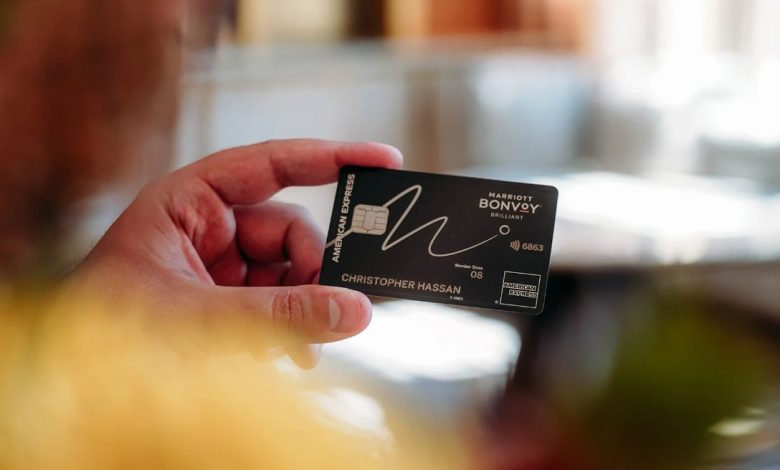
Marriott Bonvoy Brilliant has emerged as the definitive choice for modern travelers willing to invest in their hotel experiences, marking a significant shift in consumer preference away from traditional mid-tier options like the Chase Marriott Bonvoy Boundless. For years, the credit card landscape for hotel loyalists was dominated by cards with annual fees under $100, offering a free night certificate and basic status. However, as hotel loyalty programs have evolved and the value of mid-tier status has diluted, savvy consumers are increasingly pivoting toward the “premium tier.” The allure of automatic Platinum Elite status, substantial dining credits, and high-value redemption options has transformed the $650 Marriott Bonvoy Brilliant American Express Card from a niche luxury product into a mainstream powerhouse for frequent travelers.
This comprehensive analysis explores why the market is trending toward the premium sector, contrasting the robust benefits of the Amex Brilliant against the enduring popularity of the Chase Boundless. We delve into the mathematics of the annual fees, the tangible value of elite status, and the strategic advantages of holding a premium card in the current travel ecosystem.
The Rise of the Premium Tier: Why Travelers Are Upgrading
The travel landscape in 2026 is defined by a desire for friction-free experiences. Travelers are no longer satisfied with merely earning points; they demand immediate recognition and tangible on-property benefits. This shift in consumer behavior is the primary driver behind the growing market share of the Marriott Bonvoy Brilliant card. While the sticker price of $650 may initially seem steep compared to the $95 fee of the Boundless, a deeper financial analysis reveals that the effective cost of the premium card is often negligible for active travelers.
Consumers are realizing that “status” is not created equal. Gold Elite status, which is often the ceiling for mid-tier cards, provides minimal tangible perks—mostly bonus points and a higher chance of a room with a better view. In contrast, the premium tier unlocks benefits that directly impact the quality of a stay, such as guaranteed 4 p.m. late checkout and complimentary breakfast at most brands. As travel costs rise, the ability to secure free breakfast for two people can save hundreds of dollars over the course of a few trips, effectively subsidizing the higher annual fee.
Automatic Platinum Elite Status: The Game Changer
The single most compelling factor driving the shift to the Marriott Bonvoy Brilliant is the automatic provision of Platinum Elite status. Previously, earning this status required 50 elite qualifying nights in a calendar year—a threshold that is difficult for leisure travelers and even many business travelers to reach naturally. By attaching this status directly to the card, American Express and Marriott have democratized access to top-tier benefits.
Platinum Elite status grants access to executive lounges at properties like JW Marriott, Sheraton, and Renaissance hotels. Lounge access provides a quiet space to work or relax, along with complimentary snacks and beverages throughout the day and evening hors d’oeuvres. For a business traveler, this replaces the need to find a coffee shop or buy dinner, adding significant value. Furthermore, the potential for suite upgrades (including Select Suites) upon arrival is a benefit that can transform a standard vacation into a luxury getaway without additional cost.
The Value of the 85,000-Point Free Night Award
Another major differentiator is the annual Free Night Award (FNA). The Marriott Bonvoy Brilliant offers an FNA valued at up to 85,000 points, which can be topped off with up to 15,000 additional points from a member’s account to book properties costing up to 100,000 points per night. This opens the door to aspirational properties such as the St. Regis, Ritz-Carlton, and luxury collection resorts that are completely out of reach for the 35,000-point certificate provided by the Boundless card.
For detailed categorization of these properties, you might check our category sitemap to understand how different hotel tiers align with these certificates. The ability to redeem a single night at a property that might otherwise cost $800 to $1,200 essentially negates the annual fee in one transaction. This high-leverage redemption capability is a key reason why consumers are moving upmarket.
Marriott Bonvoy Boundless: Still the King of Mid-Tier?
Despite the migration to premium cards, the Chase Marriott Bonvoy Boundless remains a formidable contender in the mid-tier segment. Its $95 annual fee makes it an incredibly low-risk option for casual travelers who may only stay at Marriott properties a few times a year. The card’s value proposition is simple: if you can get more than $95 of value from the annual 35,000-point Free Night Award, the card is worth keeping.
Analyzing the $95 Annual Fee Proposition
For the budget-conscious consumer, the Boundless card acts as a “keeper card.” It does not require active management or significant spending to justify its place in a wallet. The automatic Silver Elite status is largely negligible in terms of benefits, but the 15 Elite Night Credits (ENCs) it provides can be a useful boost for those chasing higher status through actual “heads in beds” nights. The card appeals to a demographic that values simplicity and consistent, albeit modest, returns.
The New 2026 Airfare Credit Benefit
To combat the allure of premium cards, Chase has introduced new enhancements to the Boundless card for 2026. A notable addition is the $100 statement credit for airfare purchases, distributed as $50 semi-annually. While this requires cardholders to be more proactive in using their card for flight bookings, it effectively wipes out the annual fee for those who travel even moderately. This move indicates that Chase is aware of the competitive pressure and is adding value to retain the mid-tier customer base.
Comparative Analysis: Brilliant vs. Boundless
To visualize the differences that are driving consumer preference, the following table breaks down the core features of both cards.
| Feature | Marriott Bonvoy Brilliant (Amex) | Marriott Bonvoy Boundless (Chase) |
|---|---|---|
| Annual Fee | $650 | $95 |
| Elite Status | Platinum Elite (Automatic) | Silver Elite (Automatic) |
| Elite Night Credits | 25 Nights | 15 Nights |
| Free Night Award | Up to 85,000 Points | Up to 35,000 Points |
| Dining/Travel Credits | $300 Dining ($25/mo) | $100 Airfare (2026 Promo) |
| Earning Rate (Hotels) | 6x Points | 6x Points |
| Lounge Access | Priority Pass Select | None |
The Keeper Card Strategy vs. The Status Card Strategy
The choice between these two cards often comes down to a fundamental difference in strategy: holding a card for its long-term value retention versus holding a card for its immediate experiential benefits. The “Keeper Card” strategy favors the Boundless. It is a passive investment. You pay the fee, you get a certificate, and you redeem it for a night at a Courtyard or Residence Inn that costs $150, netting a $55 profit. This strategy is scalable and low-stress.
The “Status Card” strategy, represented by the Brilliant, is active. It requires the cardholder to utilize the monthly dining credits to recoup $300 of the fee. It assumes the cardholder values breakfast and upgrades. If a traveler stays 20 nights a year at Marriott properties, the Platinum status from the Brilliant card could easily deliver $1,000+ in value through upgrades, late checkouts, and food and beverage amenities. For more insights on how these strategies play out in real-world scenarios, reviewing our post sitemap can reveal specific case studies and travel logs.
Stacking Elite Night Credits (15 vs. 25)
An advanced strategy for Marriott loyalists involves the accumulation of Elite Night Credits. The Brilliant card offers 25 ENCs, giving a head start toward Titanium Elite status (which requires 75 nights). The Boundless offers 15 ENCs. Crucially, Bonvoy rules allow members to stack ENCs from one personal card and one business card. Therefore, a holder of the Brilliant and a Marriott Business card could start the year with 40 Elite Night Credits, putting them within striking distance of the 50-night Choice Benefit or the 75-night Titanium tier without significant travel. This mathematical advantage is another subtle driver pushing serious hobbyists toward the Brilliant.
Earning Potential and Redemption Power
While perks drive the signup decision, earning rates drive daily usage. Both cards earn 6x points per dollar spent at participating Marriott Bonvoy hotels. However, the Brilliant pulls ahead with 3x points at restaurants worldwide and on flights booked directly with airlines. The Boundless earns 3x points on the first $6,000 spent in combined gas, grocery, and dining categories, then drops to 2x. For a high spender, the uncapped 3x on dining with the Brilliant is superior.
Redemption power is where the points truly matter. Marriott points are versatile, but their value is maximized at high-end properties where cash rates are exorbitant. A traveler holding the Brilliant card is more likely to target these redemption sweet spots because their status enhances the stay. For example, redeeming 85,000 points for a night at the St. Regis New York becomes exponentially more valuable when accompanied by a Platinum-level upgrade and breakfast, compared to a Gold member redeeming the same points for a standard room.
Dining and Travel Multipliers
The Brilliant card’s structure encourages use as a primary dining card for those who do not hold other premium dining cards. The $25 monthly credit is a “use it or lose it” benefit that ensures the card stays top-of-wallet at least once a month. Conversely, the Boundless is often relegated to the sock drawer after the welcome bonus is met, surfacing only for Marriott stays. This difference in daily utility reinforces the Brilliant’s position as a lifestyle card rather than just a hotel loyalty card.
Conclusion: Which Card Fits Your 2026 Strategy?
The consumer shift toward the Marriott Bonvoy Brilliant is rational and data-driven. As travel prices inflate, the fixed cost of the $650 annual fee becomes a smaller percentage of the total travel budget, while the fixed benefits (breakfast, lounge access, 85k certificate) rise in comparative value. For the traveler who spends more than 10 nights a year in hotels, the math heavily favors the Brilliant. The Boundless remains an excellent product for the Marriott Bonvoy program beginner or the ultra-casual traveler, but it is no longer the default recommendation for anyone seeking to maximize their travel experience.
Ultimately, the decision rests on how much you value the soft perks of travel. If walking into a hotel and knowing you have a dedicated check-in line, a guaranteed late checkout, and a hot breakfast waiting for you is worth the premium, then the shift to the Brilliant is not just a trend—it is an upgrade in travel philosophy. For further exploration of credit card offers and updates, you can always refer to our page sitemap for the latest guides.