Table of Contents
- Marriott Bonvoy Bold vs Boundless: The Value Optimization Debate
- Analyzing the Annual Fee Structure
- The 15 Elite Night Credits: A Strategic Differentiator
- Earning Multipliers and Spending Analysis
- The 35,000-Point Free Night Award Valuation
- Comparison Table: Features and Benefits
- The 2026 Sign-Up Bonus Wars
- Silver Elite Status and Travel Protections
- Foreign Transaction Fees and International Utility
- Verdict: Which Card Optimizes Value?
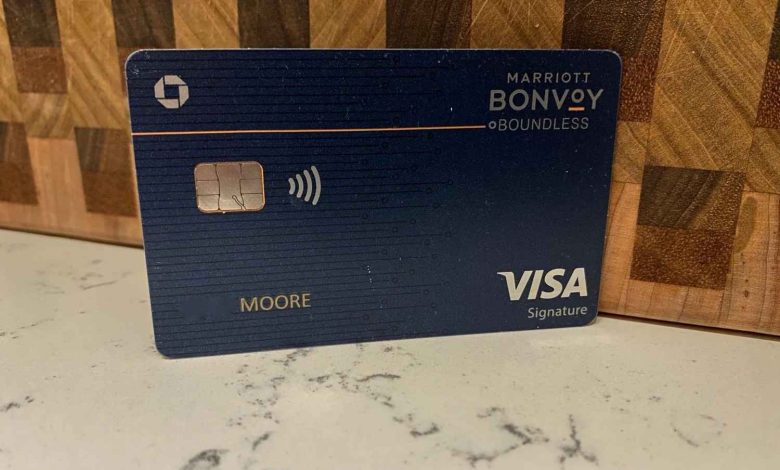
Marriott Bonvoy Bold vs Boundless is the primary debate for travelers in 2026 who are embracing the “value-optimization” trend. As the cost of travel stabilizes and loyalty programs evolve, consumers are no longer blindly applying for premium cards; instead, they are meticulously calculating the return on investment (ROI) of every annual fee. The central question driving this comparison is whether the Marriott Bonvoy Boundless® Credit Card’s $95 annual fee—anchored by 15 Elite Night Credits and a Free Night Award—truly outperforms the risk-free proposition of the Marriott Bonvoy Bold® Credit Card.
Marriott Bonvoy Bold vs Boundless: The Value Optimization Debate
In the current financial landscape, “value-optimization” has become the buzzword for credit card enthusiasts. This philosophy dictates that a card must not only provide perks but also offer a clear, mathematical path to surpassing its cost. The Marriott Bonvoy Bold and Boundless cards represent two distinct approaches to this philosophy. The Bold appeals to the “defensive” optimizer who avoids fixed costs, while the Boundless targets the “aggressive” optimizer who leverages benefits to extract outsized value.
For many, the decision hinges on the travel frequency. A casual traveler taking one or two trips a year might find the Bold’s lack of an annual fee perfectly sufficient. However, for those chasing the coveted Platinum Elite status, the mathematical reality of the Boundless card’s benefits often creates a compelling case for paying the fee. Understanding the nuances of these two products requires a deep dive into their respective earning structures, status accelerators, and redemption potential.
Analyzing the Annual Fee Structure
The most immediate differentiator is the cost of entry. The Marriott Bonvoy Bold positions itself as a gateway product with a $0 annual fee. This lack of financial commitment makes it an attractive option for credit building or for keeping a Marriott account active without incurring costs. It serves as a “sock-drawer” card for many—a card kept primarily for the longevity of the credit line and occasional brand-specific purchases.
Conversely, the Marriott Bonvoy Boundless commands a $95 annual fee. In the world of premium travel cards, this is considered a mid-tier fee, significantly lower than the luxury cards that charge upwards of $650. However, the psychological barrier of an annual fee demands justification. Proponents of the Boundless card argue that the fee is effectively pre-paying for a discounted hotel night, provided the cardholder can utilize the annual Free Night Award. If the value of that night exceeds $95, the card is technically “free” in terms of net value. If a consumer fails to use the certificate, the Bold immediately wins the value argument.
The 15 Elite Night Credits: A Strategic Differentiator
Perhaps the most critical factor for loyalists in this comparison is the allocation of Elite Night Credits (ENCs). These credits are the currency of status, helping members climb from Silver to Gold and eventually to Platinum Elite, where benefits like free breakfast and suite upgrades become tangible.
As of 2026, the **Marriott Bonvoy Boundless** grants cardholders **15 Elite Night Credits** annually. This is a massive head start, effectively covering 30% of the requirement for Platinum Elite status (which requires 50 nights). For a traveler who naturally stays 35 nights a year, the Boundless card bridges the gap to Platinum, unlocking thousands of dollars in potential value through upgrades and lounge access.
In contrast, the **Marriott Bonvoy Bold** typically offers **5 Elite Night Credits** per year. While this provides a small boost, it does not offer the same acceleration. A traveler with the Bold card would need to stay 45 nights to reach Platinum, a significantly harder threshold to cross. For the casual traveler, 5 nights might be irrelevant, but for the status chaser, the 10-night difference between the Bold and Boundless is often the deciding factor that justifies the annual fee.
Earning Multipliers and Spending Analysis
The rate at which cardholders earn points on daily spending further widens the gap. The “value-optimization” trend relies heavily on maximizing the return on every dollar spent.
The Boundless card is designed to be a workhorse. It earns **6X points** per dollar spent at participating Marriott Bonvoy hotels. Furthermore, it offers enhanced multipliers on everyday categories, such as **3X points** on the first $6,000 spent in combined purchases each year on gas stations, grocery stores, and dining. This allows the card to serve as a decent primary card for a moderate spender.
The Bold card, being a no-annual-fee product, has more modest earnings. It generally offers **3X points** at Marriott properties. For everyday spend, it offers **2X points** on travel purchases (which includes rideshare) but lacks the higher ceiling of the Boundless on Marriott-specific spend. When you do the math, a traveler spending $2,000 annually at Marriott hotels would earn 12,000 points with the Boundless versus only 6,000 points with the Bold. Valuing Marriott points at roughly 0.8 cents each, the earnings difference on hotel spend alone begins to chip away at the annual fee.
The 35,000-Point Free Night Award Valuation
The “Killer Feature” of the Marriott Bonvoy Boundless is the annual Free Night Award (FNA). Awarded every year after the account anniversary, this certificate is valid for a one-night stay at a property with a redemption level of up to 35,000 points. Crucially, Marriott allows members to “top off” these certificates with up to 15,000 additional points from their account, making them usable at hotels costing up to 50,000 points.
In major cities or during peak travel times, a 35,000-point hotel room can easily cost $200 to $300 in cash. By redeeming this certificate for a stay that costs more than $95, the cardholder achieves “positive expected value.” This is the cornerstone of the Boundless card’s value proposition. The Marriott Bonvoy Bold **does not offer** an annual Free Night Award. Therefore, the Bold cannot generate value purely through holding the card; it relies entirely on spend-based rewards. For the optimizer, the Boundless is an asset that pays a dividend (the room night), whereas the Bold is simply a tool.
Comparison Table: Features and Benefits
To visualize the trade-offs, the following table breaks down the core metrics of both cards in the context of the 2026 market.
| Feature | Marriott Bonvoy Bold® | Marriott Bonvoy Boundless® |
|---|---|---|
| Annual Fee | $0 | $95 |
| Elite Night Credits | 5 Nights | 15 Nights |
| Free Night Award | None | 1 Annually (up to 35k pts) |
| Marriott Earn Rate | 3X Points | 6X Points |
| Everyday Multipliers | 2X Travel/Grocery (select) | 3X Gas/Dining/Grocery (cap applies) |
| Foreign Transaction Fees | None | None |
The 2026 Sign-Up Bonus Wars
In early 2026, the competition for wallet share has intensified, leading to historically high sign-up bonuses. The Boundless card has recently featured an offer of **5 Free Night Awards** (each valued up to 50,000 points) after meeting minimum spend requirements. This bonus alone has a potential value of up to 250,000 points. If utilized at high-category properties, this bonus can be worth over $2,000, effectively offsetting the annual fee for twenty years.
The Bold, attempting to remain competitive, has also seen elevated offers, such as **2 Free Night Awards** (up to 50,000 points each). While generous for a no-fee card, the difference in upfront value is staggering. The disparity between 5 nights and 2 nights is often enough to sway consumers to the Boundless for at least the first year. The strategy of “downgrading” is also relevant here: savvy consumers may apply for the Boundless to secure the massive bonus and 15 elite night credits, then downgrade to the Bold in year two if they find the annual fee burdensome—though most find the annual free night certificate worth keeping.
Silver Elite Status and Travel Protections
Both cards grant the holder automatic **Silver Elite Status**. In the grand scheme of Marriott Bonvoy, Silver status is not particularly transformative—it offers 10% bonus points on stays and priority late checkout (subject to availability). Since both cards offer this entry-level tier, it is not a differentiator. However, the path to *higher* status is the key. The Boundless allows cardholders to earn Gold Elite status purely through spending ($35,000 in a calendar year), a mechanism absent on the Bold.
Regarding protections, both cards are issued by Chase and typically come with decent travel assurances, such as baggage delay insurance and lost luggage reimbursement. The fact that the Bold includes these protections without an annual fee is a significant mark in its favor for budget-conscious international travelers who want peace of mind without the premium price tag.
Foreign Transaction Fees and International Utility
A surprising feature of the Marriott Bonvoy Bold is the absence of foreign transaction fees (FX fees). Most no-annual-fee cards charge a 3% fee on international purchases. By waiving this, the Bold becomes an excellent travel companion for students, backpackers, or budget travelers exploring abroad. The Boundless also waives FX fees, which is standard for a mid-tier travel card. Thus, for the specific purpose of avoiding FX fees, the Bold offers the same utility as the Boundless but at a lower cost basis.
Verdict: Which Card Optimizes Value?
Marriott Bonvoy Bold vs Boundless ultimately comes down to a simple calculation of travel volume and status ambition.
**Choose the Marriott Bonvoy Bold if:**
* You are strictly opposed to paying annual fees.
* You travel infrequently (1-2 times per year) and are unlikely to use a 35k free night certificate.
* You want a secondary card for international travel to avoid foreign transaction fees without ongoing costs.
**Choose the Marriott Bonvoy Boundless if:**
* You stay at Marriott properties at least once a year (to use the Free Night Award).
* You value the 15 Elite Night Credits to help you reach Platinum Elite status.
* You want to capitalize on a significantly higher sign-up bonus (5 nights vs 2 nights).
* You spend enough on the card to justify the higher point multipliers.
For the true “value-optimizer,” the **Marriott Bonvoy Boundless** is the superior mathematical choice. The combination of the annual certificate (which subsidizes the fee) and the 15 Elite Night Credits (which accelerate status) creates a flywheel of value that the Bold cannot replicate. The Bold is a competent no-fee card, but the Boundless is a tool for travel hacking.
For more details on maximizing hotel loyalty programs, you can refer to this comprehensive guide on Marriott Bonvoy strategies.