7 Reasons to Love Marriott’s Grand Chateau – Premium Suites Near the Strip
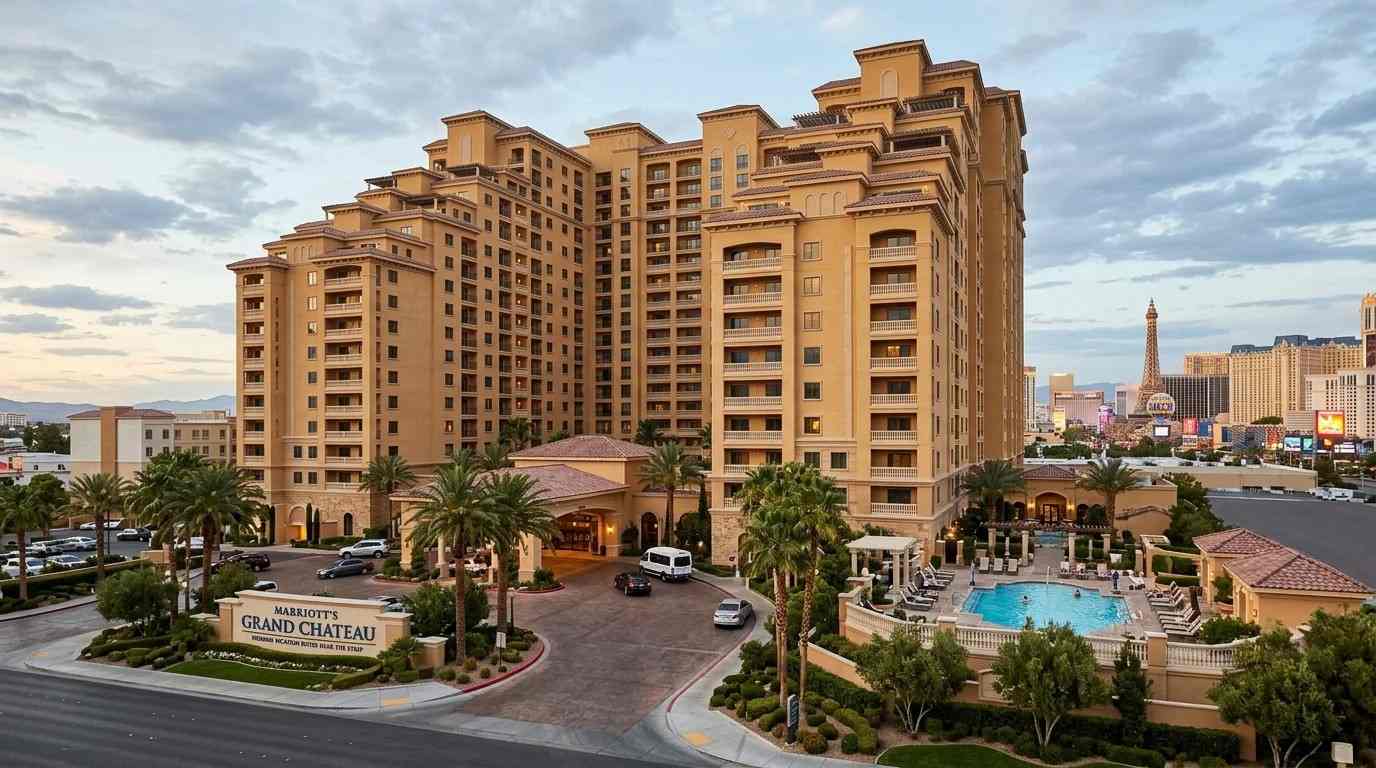
Table of Contents
Marriott’s Grand Chateau offers a distinctive and highly sought-after vacation experience in the heart of Las Vegas, providing premium vacation suites just a stone’s throw from the iconic Strip. This Marriott Vacation Club resort stands out as an appealing option for travelers seeking the excitement of Las Vegas combined with the comforts and spaciousness of a luxury residence rather than a traditional hotel room. Unlike many other properties in the area, Marriott’s Grand Chateau is a non-gaming and non-smoking establishment, providing a more tranquil retreat for guests. It debuted in 2005, adding a unique offering to the bustling Las Vegas hospitality scene.
An Unparalleled Las Vegas Experience Beyond the Casino Floor
For those who desire the vibrant energy of Las Vegas without the constant immersion in casino floors, Marriott’s Grand Chateau presents an ideal solution. This 38-story tower, managed by Marriott Vacation Club, is situated near the Las Vegas Strip, offering guests convenient access to world-class entertainment, dining, and attractions while providing a serene “home away from home” atmosphere. As a Marriott Vacation Club property, it emphasizes a vacation ownership model, though accommodations are also available for non-owners, often providing exceptional value. The resort’s commitment to a no resort fee policy and complimentary Wi-Fi for Marriott Bonvoy members further enhances its appeal, offering a straightforward and value-driven stay in a city where additional fees can quickly accumulate.
The ethos behind Marriott Vacation Club, founded in 1984 as Marriott Ownership Resorts, Inc., was to redefine vacation ownership by integrating Marriott’s signature quality and service into a flexible vacation experience. Marriott’s Grand Chateau embodies this philosophy, providing luxurious villa accommodations that cater to families, couples, and groups seeking more than just a standard hotel room. The resort’s design, reminiscent of the timeless mansions of Southern France, adds a touch of casual elegance to the dazzling Las Vegas landscape.
Prime Location: Steps from the Las Vegas Strip
Marriott’s Grand Chateau boasts a strategic location just a half block or short walk from the legendary Las Vegas Strip. This proximity means guests can easily access major attractions like the MGM Grand, Planet Hollywood, and The Cosmopolitan Casino within minutes, either by walking or a quick ride. For instance, it’s approximately a 15-minute walk from the Las Vegas Strip. Public transportation options, including the RTC Bus Lines and the Las Vegas Monorail, are also conveniently located nearby, making exploration of the wider city effortless. The bus journey from NB Koval after Harmon to WB Spring Mountain after Las Vegas takes approximately 9 minutes and operates every 30 minutes, costing around $6. Taxis offer an even quicker 3-minute ride for $12-15.
Being slightly set back from the main thoroughfare, the resort offers a quieter environment, a welcome respite after a day or night spent amidst the hustle and bustle of the Strip. It provides excellent accessibility while maintaining a sense of privacy and exclusivity. This allows guests the best of both worlds: immediate access to the entertainment capital and a peaceful retreat to return to.
Accommodation Excellence: Spacious Suites for Every Traveler
The core of Marriott’s Grand Chateau’s appeal lies in its spacious and well-appointed vacation suites, designed to feel like a true home away from home. The resort offers a variety of villa types, including studio guest rooms, one-bedroom, two-bedroom, and even three-bedroom villas, accommodating groups of various sizes, from couples to large families of up to 12 guests.
Each villa is thoughtfully equipped to ensure maximum comfort and convenience. Standard features across many units include separate living and dining areas, a fully equipped kitchen or kitchenette, and in-room laundry facilities with a washer/dryer, a significant advantage for longer stays. Kitchen amenities typically include a full-size refrigerator, microwave, toaster, coffee maker, and ample silverware and dishware, allowing guests the flexibility to prepare their own meals. The larger villas often boast expansive master suites with oversized soaking tubs, adding a touch of luxury to the private quarters. Furthermore, each suite generally comes with multiple LCD TVs and a DVD player, providing entertainment options for everyone. Complimentary Wi-Fi is available throughout the resort, and specifically free for Marriott Bonvoy members, ensuring guests stay connected.
The commitment to guest comfort is evident in the details, from air conditioning to essential items like an iron/ironing board and alarm clocks. Accessibility is also a priority, with options for mobility accessible rooms featuring tubs or roll-in showers, as well as hearing accessible rooms with visual alarms and notification devices.
World-Class Resort Amenities for Relaxation and Recreation
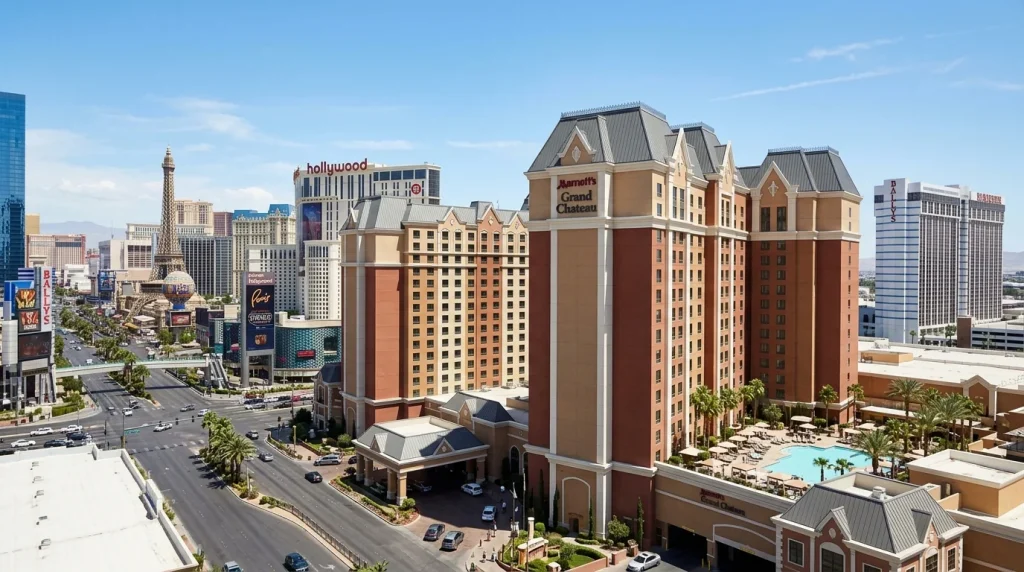
Marriott’s Grand Chateau prides itself on a comprehensive array of amenities designed to enhance every guest’s stay, fostering both relaxation and recreation. The resort features two outdoor swimming pools, including a unique rooftop pool on the 38th floor, known as SkyBar 38 Pool, which offers breathtaking panoramic views of the Las Vegas Strip. A second pool is located on the 5th floor. Guests can also enjoy a soothing dip in one of three whirlpool spas, strategically placed for intimate oases. The pools are complemented by lounge chairs, and the rooftop pool even has overhangs to provide shade.
For those maintaining their fitness regimen, a complimentary 24-hour fitness center equipped with cardiovascular and strength-training equipment is available. The resort also offers other services such as concierge assistance, laundry facilities, valet dry cleaning, and a business center. Uniquely, Marriott’s Grand Chateau does not charge extra resort fees, a significant benefit in Las Vegas, where such fees are common.
Parking at the resort is facilitated through complimentary valet parking for owners and vacation ownership package reservations. For rental reservations, on-site parking is available for $25 daily per vehicle, with arrangements required for larger vehicles. However, some sources also state free valet parking for all guests. The absence of a casino on-site contributes to the tranquil atmosphere and distinguishes it from many other Strip properties, though numerous casinos are within walking distance for those seeking gaming excitement.
| Feature Category | Marriott’s Grand Chateau Offerings | Typical Las Vegas Strip Hotel (Comparison) |
|---|---|---|
| Accommodation Type | Spacious 1, 2, 3-bedroom villas & studio guest rooms with living/dining areas. | Standard hotel rooms, some suites available at higher rates. |
| Kitchen Facilities | Full kitchen or kitchenette in most units. | Mini-fridge, limited or no cooking facilities. |
| Laundry Facilities | In-suite washer/dryer in most villas. | On-site communal laundry rooms or valet dry cleaning. |
| Resort Fees | None. | Typically $30-50+ per night, plus tax. |
| Gaming On-site | No casino, non-gaming property. | Large casinos are central to the experience. |
| Pools | Two outdoor pools (including rooftop with Strip views) and three whirlpool spas. | Large pool complexes, often crowded. |
| Parking | Complimentary valet for owners/packages, $25 daily for rental reservations. (Some sources indicate free for all.) | Often paid self-parking and valet, sometimes included in resort fee. |
Culinary Delights: On-Site and Nearby Dining Experiences
While the fully equipped kitchens in the suites offer the convenience of preparing meals in-house, Marriott’s Grand Chateau also provides several appealing on-site dining and beverage options, along with easy access to the myriad culinary experiences of the Las Vegas Strip.
The resort features The Marketplace, a convenience store where guests can pick up snacks, sundries, and Starbucks® coffee for a quick start to their day or a light bite. For a more relaxed setting, La Diva Lobby Bar serves handcrafted cocktails and appetizers, and guests can also catch a game on TV while enjoying a full-service menu. Seasonal options include the 5th Floor Pool Bar & Grill, offering grilled favorites and cold drinks by the pool, and Sky Bar 38, the rooftop bar providing refreshing drinks with panoramic Strip views (weather permitting). La Diva offers main courses such as Angus NY Steak, BBQ Pork Ribs, and Soy Glazed Pan Seared Salmon, alongside flatbreads and appetizers.
Beyond the resort’s boundaries, guests are within easy reach of an unparalleled selection of dining establishments on the Las Vegas Strip, catering to every palate and preference, from casual eateries to Michelin-starred restaurants. Proximity to destinations like Planet Hollywood, with its diverse dining options, means a vast culinary landscape is just moments away. Whether craving Italian, Mexican, French, or a classic American steakhouse, the options are virtually endless.
Family-Friendly Advantages and Unique Selling Points
Marriott’s Grand Chateau is particularly well-suited for families, offering a blend of space, amenities, and a strategic location that makes it an excellent choice for a family-friendly Las Vegas vacation. The spacious multi-bedroom villas with full kitchens and laundry facilities are a significant advantage, providing room for everyone to spread out and the convenience of home-cooked meals and fresh clothes, especially beneficial for longer stays with children.
The resort also offers children’s recreation activities, and its non-gaming, non-smoking environment ensures a more wholesome atmosphere. The two outdoor pools and three whirlpool spas provide ample opportunities for family fun and relaxation. Furthermore, the lack of resort fees is a substantial financial benefit for families, allowing more of the vacation budget to be allocated to experiences.
Another unique aspect is its status as a Marriott Vacation Club property. While this implies a timeshare ownership model, it also means a focus on high-quality, consistent experiences tailored for repeat visitors and those seeking a resort-style vacation with residential amenities. The flexibility of the Marriott Vacation Club Destinations program, allowing owners to redeem points for stays, underscores a commitment to diverse vacation experiences. More information on the broader concept of timeshares and vacation ownership can be found on Wikipedia.
Exploring Las Vegas: Attractions Near Marriott’s Grand Chateau
Beyond the comfort of the suites and the resort’s amenities, Marriott’s Grand Chateau serves as an ideal base for exploring the diverse attractions of Las Vegas and its surrounding natural wonders. The resort’s proximity to the Strip means iconic entertainment venues are within easy reach. Guests can enjoy world-class shows, explore famous casinos, or discover endless shopping at destinations like Fashion Show Mall, The Shops at Crystals, and Miracle Mile Shops.
For family-friendly entertainment, popular choices include Hershey’s Chocolate World, the Shark Reef Aquarium at Mandalay Bay, the Fountains of Bellagio, and the Bellagio Conservatory & Botanical Gardens, many of which are free to experience. Shows like Jabbawockeez and Cirque du Soleil’s Mystère also offer captivating entertainment for all ages.
For those looking to venture beyond the neon lights, Las Vegas offers access to stunning natural landscapes. Day trips to the Hoover Dam, Lake Mead National Recreation Area, Red Rock Canyon, and even the Grand Canyon National Park are popular and easily organized excursions. Valley of Fire State Park, with its vibrant red sandstone formations, also presents a breathtaking natural escape. The concierge desk at Marriott’s Grand Chateau is available to provide personalized assistance and recommendations for dining, tours, and local attractions, helping guests make the most of their Las Vegas adventure.
Conclusion: Your Ideal Las Vegas Home Away From Home
Marriott’s Grand Chateau truly stands as a premium destination for those visiting Las Vegas, offering a sophisticated blend of residential comfort and resort-style amenities. Its strategic location, just off the Strip, provides the perfect balance between vibrant city access and a peaceful retreat. The spacious, well-equipped villas, coupled with the absence of resort fees and the presence of multiple pools and dining options, make it an exceptional choice for families, groups, and even couples seeking an elevated and value-conscious Las Vegas experience.
Whether your ideal vacation involves exploring the dazzling shows and culinary scene of the Strip, embarking on breathtaking desert excursions, or simply relaxing by a rooftop pool with panoramic views, Marriott’s Grand Chateau offers the facilities and service to make your stay unforgettable. It redefines the Las Vegas vacation, moving beyond the traditional hotel model to provide a true home away from home amidst the excitement of the Entertainment Capital of the World.